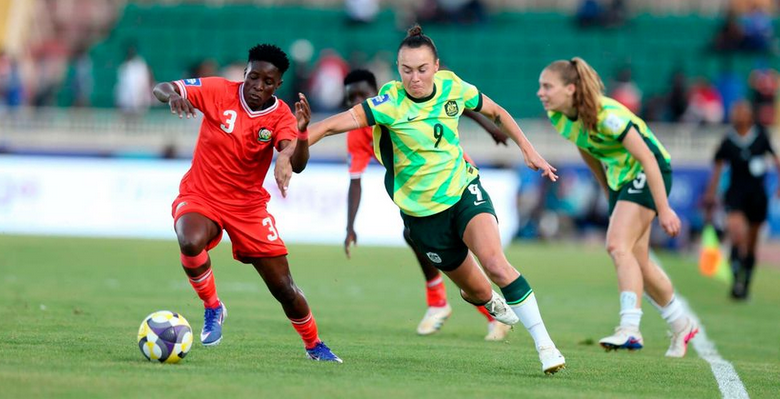
Nairobi’s Nyayo National Stadium was not just a sporting venue this past Wednesday; it was the epicenter of a commercial awakening for women’s football in Kenya. As the Harambee Starlets lined up against the star-studded Australian Matildas in the final of the inaugural 2026 FIFA Women’s Series, the electrifying atmosphere sent a resounding message to corporate Kenya: the women’s game is no longer a peripheral product. It is a highly marketable, premium asset.
While the Starlets eventually fell 2-0 to the elite visitors, the fixture was a monumental victory for the sports business ecosystem in the country. The crowd that packed the stadium was easily the largest ever recorded for a women’s football match on Kenyan soil. For potential sponsors, broadcasters, and investors, this wasn’t just a game. It was a live, tangible demonstration of a passionate, captive demographic hungry for high-quality women’s sports. Nairobi proved it is a women’s football fortress.
On the pitch, the gap in global pedigree was tested, and the Starlets delivered a brand of football that was both gallant and engaging. Australia’s legendary forward Sam Kerr opened the scoring, sending a 15-yard effort trickling past Kenyan goalkeeper Lilian Onyango. Early in the second half, Clare Wheeler showcased elite quality, weaving her way past two Kenyan defenders to neatly side-foot home the Matildas’ second goal.
Despite a few defensive errors that ultimately punished head coach Beldine Odemba’s charges, the Harambee Starlets created numerous scoring opportunities of their own. They didn’t just sit back; they pushed a top-15 global powerhouse. In fact, Australia’s head coach, Joe Montemurro, was effusive in his praise for Kenya’s valiant display following the final whistle.
This kind of competitive performance significantly elevates the brand equity of the Harambee Starlets. It transitions them from regional contenders into a team capable of sharing the pitch and the spotlight with global icons.
From a business perspective, hosting the FIFA Women’s Series in Nairobi was a masterclass in sports property development. By bringing top-tier opposition to our doorstep, the tournament injected high-level commercial visibility into the local game. The event provided local vendors, ticketing platforms, and media houses with a massive engagement boost, proving the economic ripple effect that international women’s fixtures can generate.
But the real question is: How do we capitalize on this?
The 2-0 defeat should be viewed purely as a footballing lesson, not a commercial ceiling. The roaring crowds at Nyayo Stadium proved that if you provide the stage, the fans will bring the noise. The digital engagement, gate collections, and sheer cultural footprint of the match demonstrate a clear return on investment (ROI) for brands looking to align with female empowerment, youth demographics, and national pride.
As the Harambee Starlets turn their focus toward the 2026 Women’s Africa Cup of Nations (WAFCON), the momentum generated this week cannot be allowed to dissipate. Corporate entities must stop viewing women’s football as a corporate social responsibility (CSR) box to tick, and start treating it as a core sponsorship asset.
The product on the pitch has proven its worth, and the fans have proven their loyalty. Now, it is time for the business community to step up and back the Harambee Starlets with the financial muscle they rightly deserve. The roadmap to commercializing women’s football in Kenya has been drawn—it’s time to invest in it.